.svg)
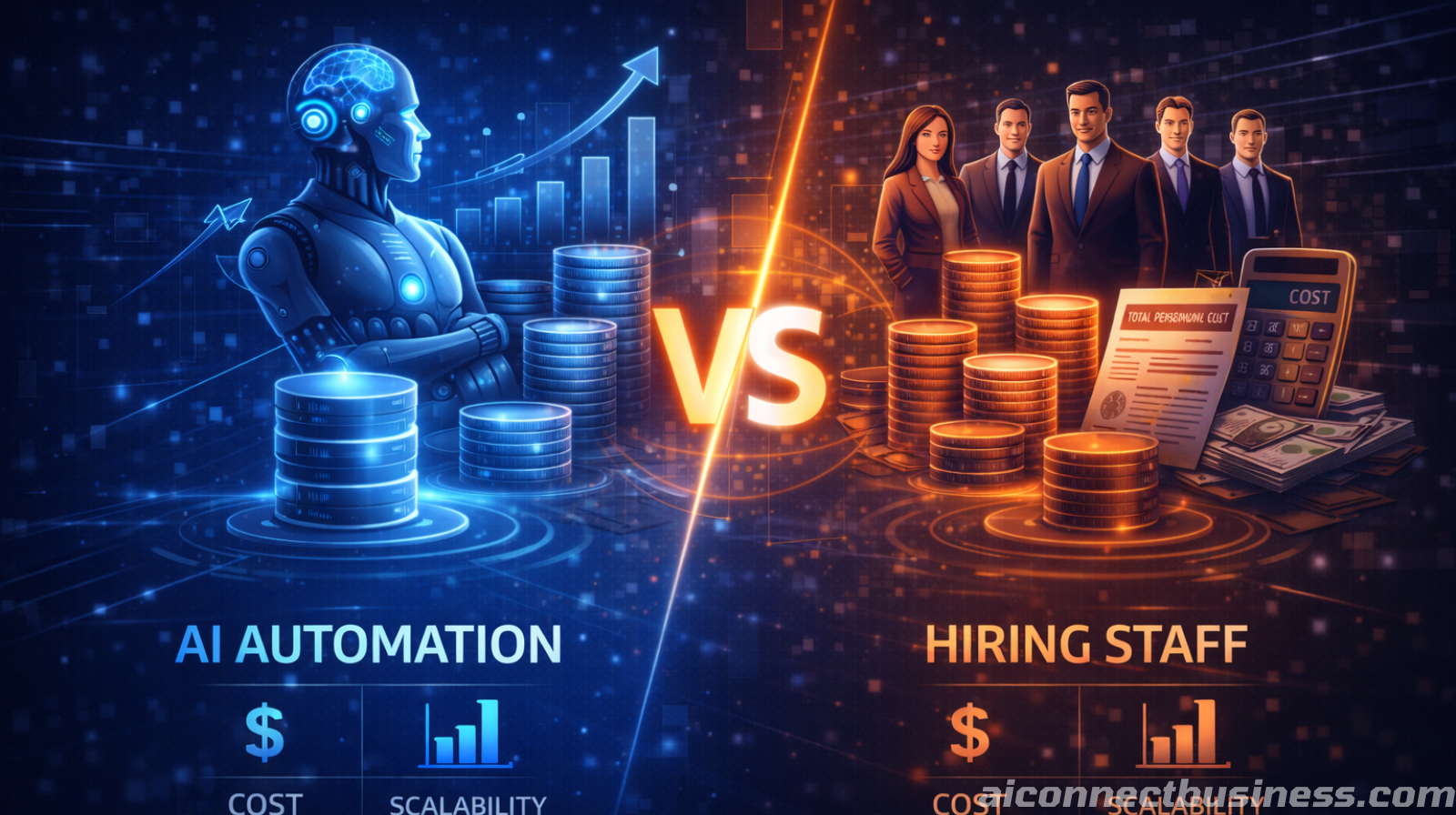
Discover the real costs and scalability benefits of AI automation compared to hiring additional staff for your growing business.
Caed G.
December 19, 2025
Your business is growing, leads are increasing, and you're facing a critical decision: should you hire more staff or invest in AI automation? This choice will shape your company's future scalability, profitability, and competitive edge.
For small and mid-sized business owners, this decision often feels overwhelming. Hiring seems familiar and straightforward, while AI automation might feel complex or risky. However, the numbers tell a compelling story that every business owner should understand before making this crucial investment.
In this breakdown, we'll examine real costs, scalability factors, and ROI data to help you make an informed decision that aligns with your business goals and budget.

When calculating the cost of new employees, most business owners only consider salary. However, the real cost extends far beyond the base wage.
Real Example from a Small Business: A 15-person marketing agency calculated their true cost per new hire at $67,000 annually when factoring in all expenses. This was 35% higher than the base salary they initially budgeted.
AI automation does require an upfront investment—but it operates on a completely different cost structure than hiring and managing people.
Instead of paying for individual tasks, hours, or headcount, you’re investing in systems that run continuously, scale instantly, and improve over time.
Once live, AI automation requires ongoing oversight to ensure performance, accuracy, and ROI.
Monthly investment covers:
Unlike employees, these systems:
The most significant advantage of AI automation becomes apparent when your business experiences growth spurts or seasonal fluctuations.
Real Example from a Small Business: An HVAC company using our AI phone agent system handled a 300% increase in calls during a heat wave without adding staff. The same volume would have required hiring 4-5 temporary employees at significant cost and training time.
Let's examine the financial impact over one year for a typical small business scenario.
ROI Calculation: The AI automation option saves $112,000 in the first year while providing superior scalability and consistency. This represents a 509% return on investment compared to hiring.
Many business owners make costly errors when evaluating this decision. Here are the most common pitfalls to avoid:
Focusing only on salary while ignoring benefits, taxes, equipment, training, and turnover costs leads to budget overruns and cash flow problems.
Many assume AI automation requires technical expertise or massive changes to existing processes. Modern solutions integrate seamlessly with current systems.
Planning for current needs without considering growth potential often results in having to make the same decision again within 6-12 months.
The time spent managing additional employees could be invested in business development, strategy, or other growth initiatives.
The Fastest Way to Get Started: Begin with a pilot AI automation project in one area of your business. This allows you to measure results and build confidence before expanding to other processes.
AI automation isn't always the right choice. Here are situations where hiring additional staff might be more appropriate:
The most successful businesses take a strategic approach to AI automation implementation.
Want to explore how AI automation could work for your specific business? Our strategy call includes a custom ROI analysis based on your current operations and growth goals.
The decision between AI automation and hiring additional staff isn't just about immediate costs—it's about positioning your business for sustainable, profitable growth.
Consider these key factors when making your decision:
For most small and mid-sized businesses, AI automation offers superior ROI, scalability, and competitive advantages. The technology has matured to the point where implementation is straightforward and results are measurable within weeks.
Learn more about our proven implementation process and see how we've helped businesses across various industries achieve significant growth through strategic automation.

The choice between AI automation and hiring additional staff will define your business's growth trajectory for years to come. While hiring feels familiar, the numbers clearly favor AI automation for most small and mid-sized businesses.
With first-year savings of $100,000+ and scalability that grows with your business, AI automation isn't just a cost-saving measure—it's a strategic investment in your company's future. The businesses that embrace this technology now will have significant advantages over competitors still relying solely on traditional staffing models.
Ready to explore your options? Use our ROI Calculator to see the potential impact of AI automation on your specific business, or schedule a strategy call to discuss your growth goals with our team.
The future of business growth is here—and it's more affordable and scalable than you might think.
Growth Automation is a system-level engagement designed to connect and orchestrate multiple automation lanes across your business. This service is built for companies that have moved beyond single-task automation and are ready to improve consistency, scalability, and performance across sales, operations, and internal workflows. We focus on how systems work together — connecting data, automations, and decision points — so your business runs as a coordinated system instead of disconnected tools. Automation evolves as your business grows, adapting to real-world operations rather than remaining static.
View Services →
Automation for professional service firms to improve lead follow-up, onboarding, and internal workflows.
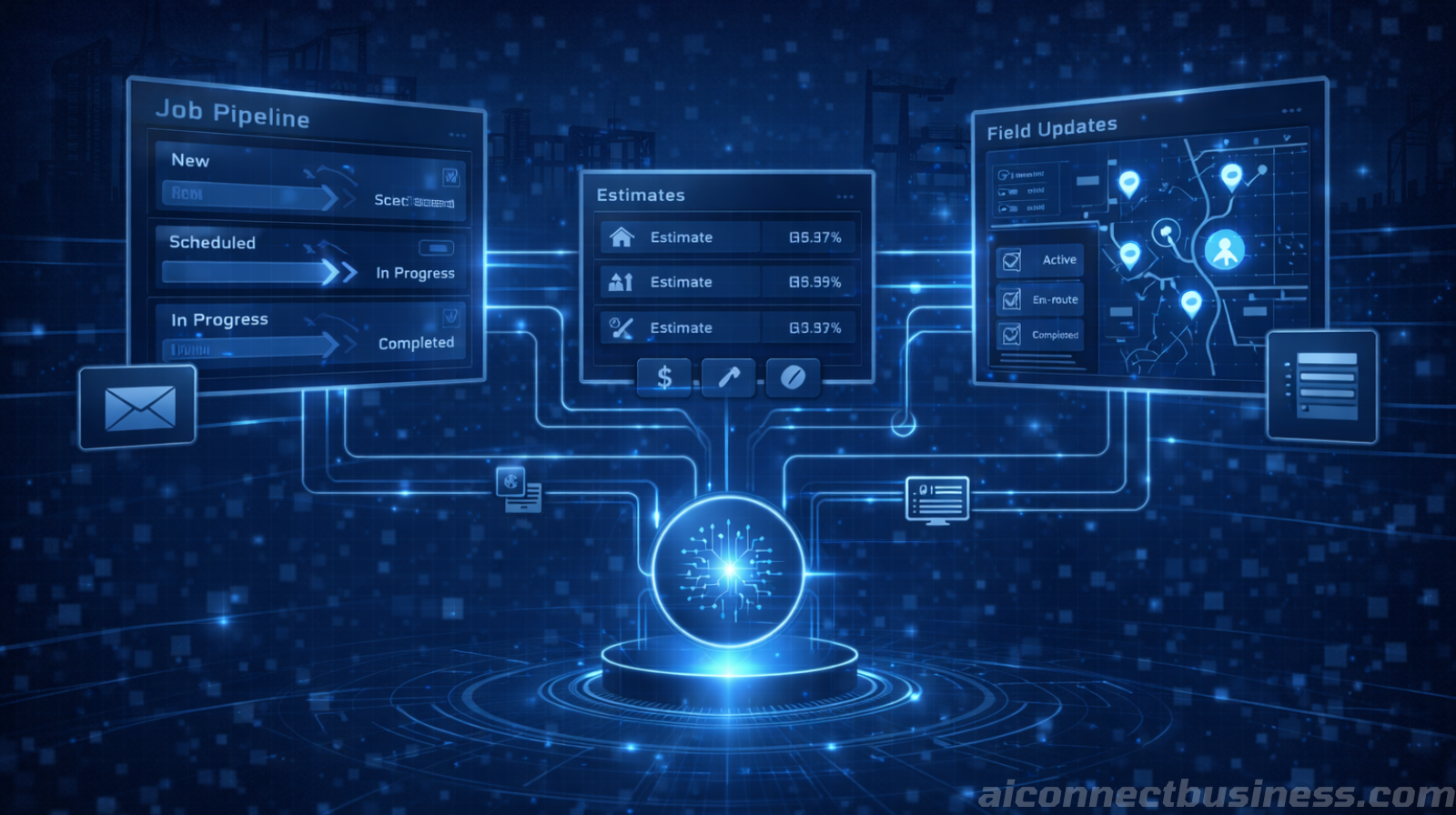
Automation for construction and trades businesses to organize leads, streamline estimating, and improve coordination.

Automation for medical practices to reduce front-desk load and improve patient follow-up.

Automation for manufacturing and industrial businesses to organize data and improve operational visibility.

Discover why AI projects fail without proper team buy-in and learn practical strategies to overcome resistance, train effectively, and ensure successful adoption.
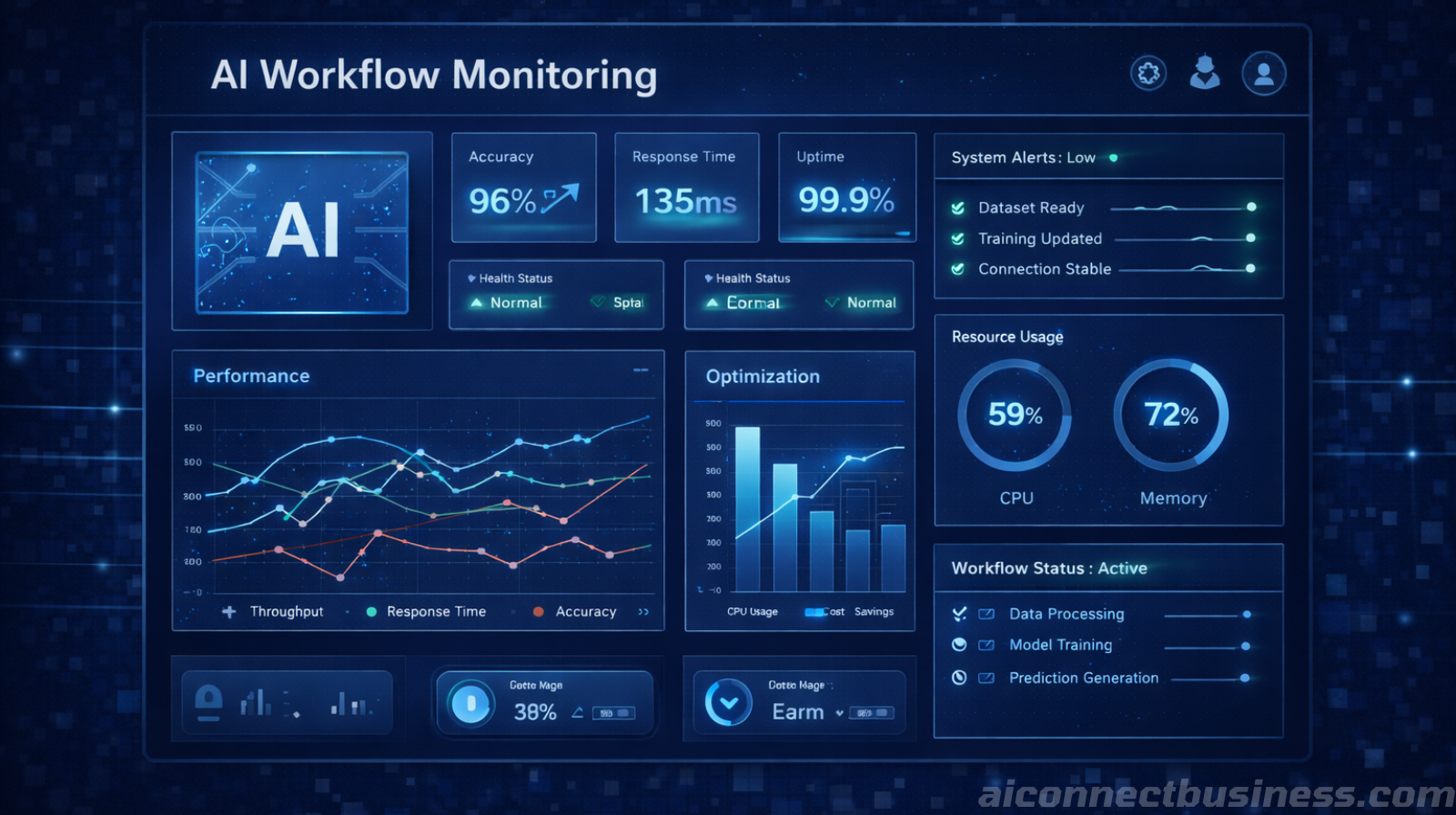
Discover why 70% of AI automation projects fail due to poor data quality and learn how to prepare your CRM, forms, and systems for successful automation.

Discover why AI automation requires ongoing optimization. Learn how monitoring, refining, and iterative improvements boost accuracy, speed, and ROI over time.

Address common AI security concerns for small businesses. Learn how to implement secure AI automation, RAG systems, and data protection without sacrificing efficiency.
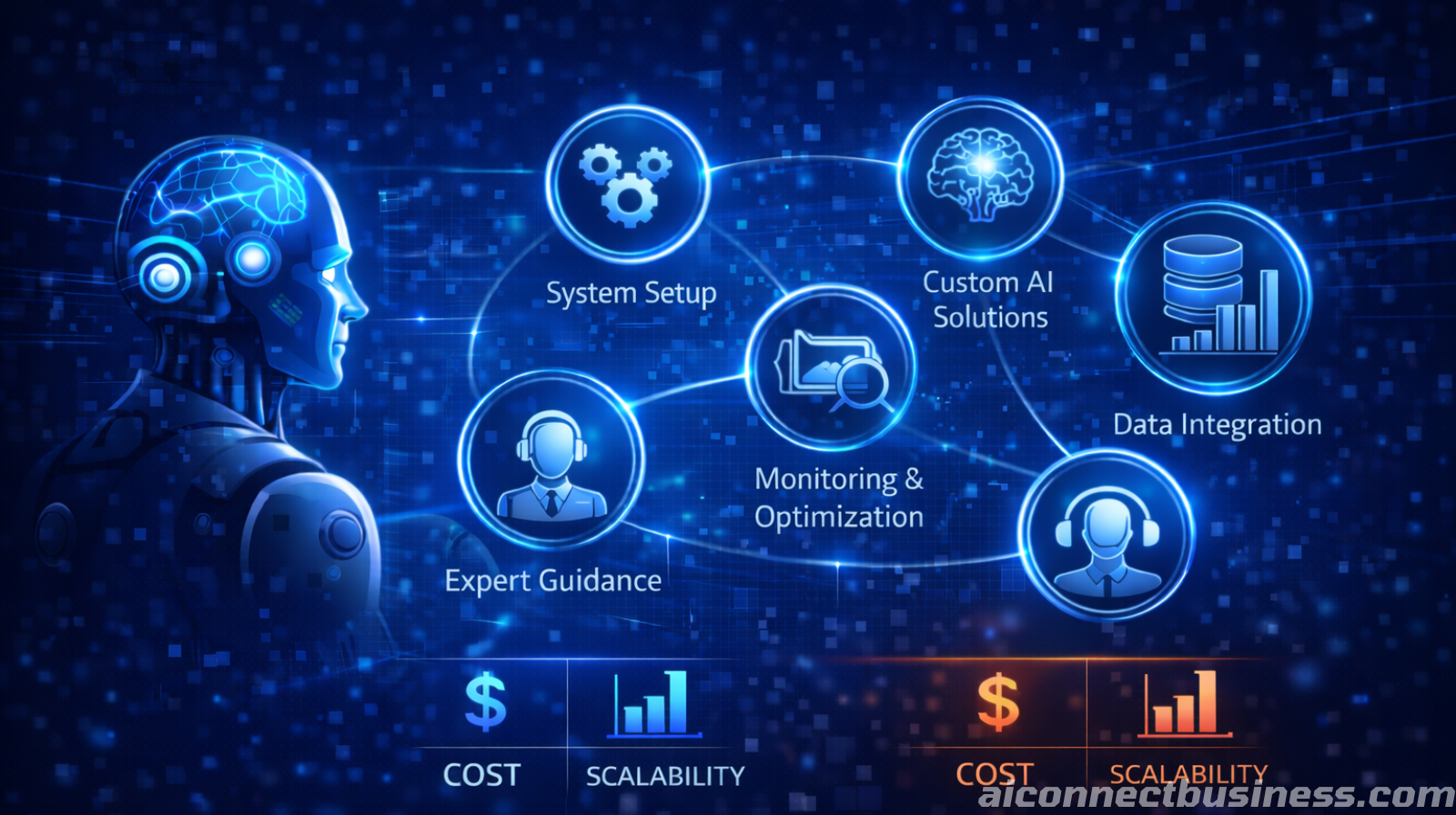
Discover what legitimate done-for-you AI automation services should include and how to avoid costly shortcuts that hurt your business.
Discover the real costs and scalability benefits of AI automation compared to hiring additional staff for your growing business.

You don’t need a tech team to start automating. We help small businesses scale faster by leveraging AI. Save time, reduces errors, and keep leads from slipping through the cracks.
Book Your Free AI Audit