.svg)

Discover why auditing your processes before AI implementation is crucial for success and learn our proven audit methodology that prevents costly mistakes.
Caed G.
December 19, 2025
Last month, a manufacturing company called us after spending $75,000 on an AI system that made their operations worse, not better. The AI was working perfectly—it was automating their broken processes with ruthless efficiency, amplifying every flaw and bottleneck in their workflow.
This scenario plays out constantly across industries. Businesses rush to implement AI without understanding what they're actually automating. They skip the audit phase, assuming their current processes are "good enough" for automation enhancement.
Here's the reality: AI doesn't fix broken processes—it accelerates them. If your manual workflow is inefficient, inconsistent, or error-prone, AI will make those problems faster and more consistent. The businesses that succeed with AI implementation always start with a comprehensive audit.
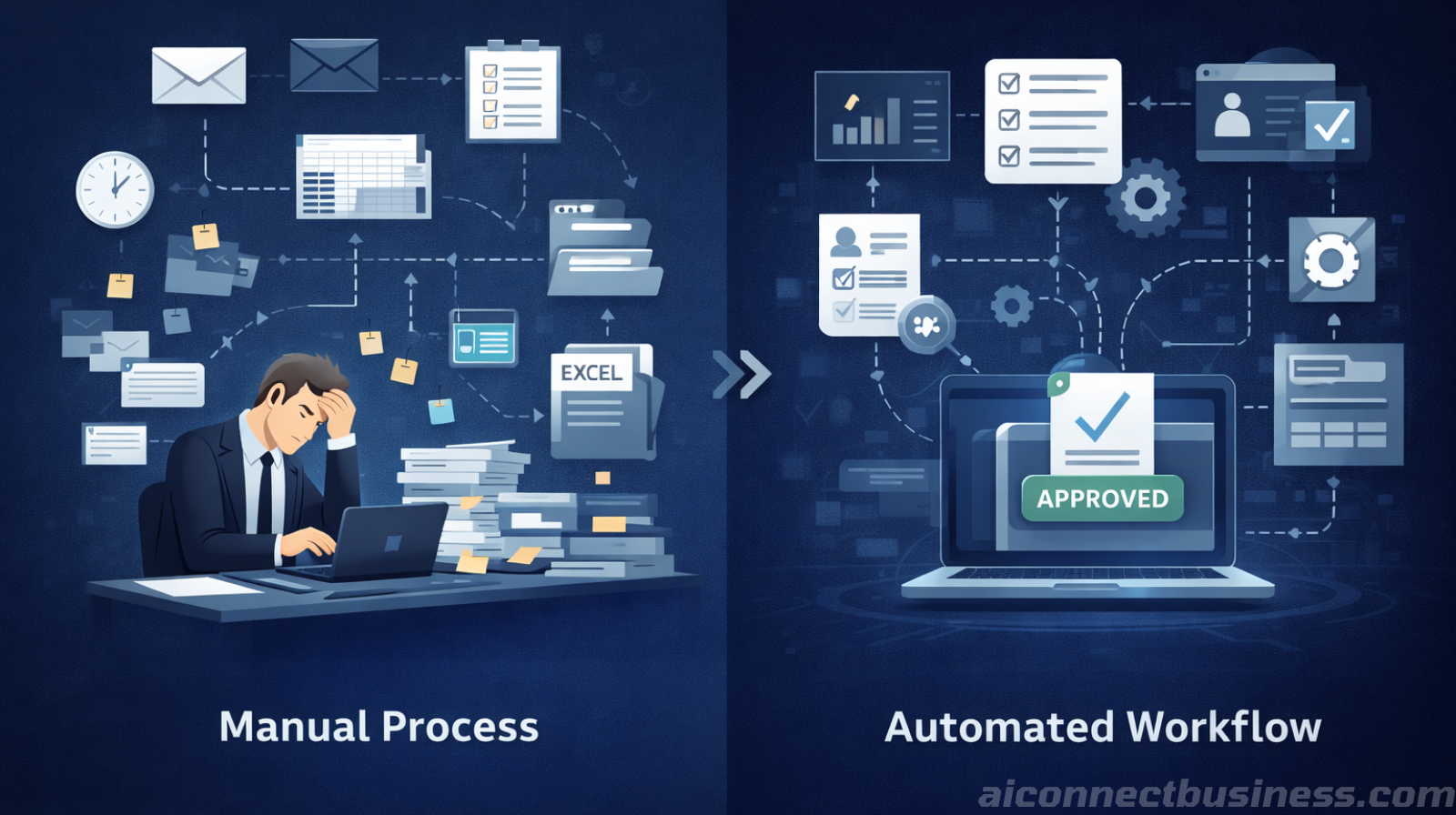
Think of AI as a high-performance engine. You wouldn't install a race car engine in a vehicle with faulty brakes, worn tires, and a cracked frame. Yet that's exactly what businesses do when they implement AI without auditing their underlying processes first.
AI systems excel at doing things consistently and at scale. This means they amplify whatever you feed them:
When businesses skip the audit phase, they face predictable consequences:
A comprehensive audit uncovers the hidden realities of how work actually gets done in your business, not how you think it gets done. The insights are often surprising and always valuable.
Most businesses discover that the same process is performed differently by different people. These variations might work fine manually but will break AI systems that expect consistent inputs and rules.
Audits reveal the informal connections between processes that aren't documented anywhere. These dependencies must be understood before AI can successfully automate any part of the workflow.
Manual processes handle exceptions through human judgment and improvisation. AI systems need explicit rules for every possible scenario, making exception identification crucial.
AI systems are only as good as the data they process. Audits uncover data inconsistencies, gaps, and quality problems that must be addressed before automation.
We've developed a systematic approach to auditing processes before AI implementation. This framework has prevented countless failed deployments and ensures every AI project starts with a solid foundation.
The first phase involves understanding exactly how work flows through your organization today.
We document every aspect of your existing processes:
We identify how the same process differs across:
David runs a 25-person insurance agency in Denver. He wanted to automate client onboarding but assumed the process was standardized. Our audit revealed:
Without the audit, any AI implementation would have failed because it couldn't handle these variations. With the audit insights, we standardized the process first, then successfully automated it.
The second phase quantifies how well your current processes perform and identifies improvement opportunities.
We measure current process performance:
We evaluate process reliability and consistency:
We calculate the true cost of current processes:
The third phase assesses how ready each process is for AI implementation and what preparation is needed.
We evaluate processes across multiple criteria:
We identify what's needed for successful AI implementation:
We assess organizational readiness for AI adoption:
Our audit methodology follows a proven timeline that minimizes disruption while maximizing insights.
We start by understanding your business from multiple perspectives:
We observe actual work being performed:
We quantify current process performance:
We evaluate automation potential and create implementation roadmaps:
After conducting hundreds of audits, we see predictable patterns that, when addressed, dramatically improve AI implementation success rates.
Many critical process steps exist only in employees' heads. This knowledge must be captured and codified before AI can replicate the process effectively.
The same information is often stored in different formats across systems. AI requires consistent, clean data to function properly.
Teams develop informal solutions to system limitations. These workarounds must be understood and addressed in AI design.
Experienced employees perform quality checks that aren't formally documented. AI systems need explicit quality control mechanisms.
Processes often change based on time of year, business cycles, or external factors. AI systems must account for these variations.
Don't try to audit everything at once. Start with our streamlined approach for identifying your most critical audit needs.
Identify which processes to audit first:
Perform a rapid evaluation of your top priority process:
Verify your findings with process participants:
Develop your audit and improvement roadmap:
Different industries have unique factors that affect process audits and AI readiness.
Focus on patient privacy, regulatory compliance, and clinical workflow integration. Audit patient data handling, appointment scheduling, and insurance processing workflows.
Emphasize client communication, project management, and billing processes. Audit client intake, service delivery, and knowledge management workflows.
Concentrate on supply chain, quality control, and production scheduling. Audit inventory management, order fulfillment, and maintenance processes.
Prioritize risk management, compliance, and customer onboarding. Audit loan processing, account management, and regulatory reporting workflows.
A successful audit provides clear, actionable insights that improve AI implementation outcomes.
Measure audit effectiveness through:
Track how audit insights improve AI implementation:
We've conducted comprehensive audits for hundreds of businesses across every industry. Our proven audit methodology identifies the insights you need for successful AI implementation while avoiding costly mistakes.
Ready to audit your processes before implementing AI? Schedule a free strategy call to discuss your automation goals and get a preliminary assessment of your audit needs.

The most successful AI implementations don't start with technology—they start with understanding. By auditing your processes before automating them, you ensure that AI enhances your operations rather than amplifying your problems.
The businesses that skip audits often end up spending twice: once on failed AI implementations, and again on the process improvements they should have made first. Don't let your AI project become an expensive lesson in the importance of preparation.
Audit before you automate. Your future self will thank you for the time and money saved, and your team will thank you for AI that actually makes their jobs better.
Explore our AI implementation services to learn how our audit-first approach ensures successful automation projects that deliver real business value.
Core Automation is a focused engagement designed to solve one clearly defined business bottleneck using AI-driven automation. This service is ideal for companies that need immediate operational relief in a specific area — such as lead handling, customer communication, or internal workflow efficiency — without redesigning their entire system. We identify the highest-impact opportunity, design a clean automation solution, and implement it with predictable scope and outcomes. The result is faster execution, reduced manual work, and a strong foundation for future growth.
View Services →
Automation for professional service firms to improve lead follow-up, onboarding, and internal workflows.

Automation for medical practices to reduce front-desk load and improve patient follow-up.

Automation for manufacturing and industrial businesses to organize data and improve operational visibility.

Automation for construction and trades businesses to organize leads, streamline estimating, and improve coordination.

Discover why AI projects fail without proper team buy-in and learn practical strategies to overcome resistance, train effectively, and ensure successful adoption.
Discover why 70% of AI automation projects fail due to poor data quality and learn how to prepare your CRM, forms, and systems for successful automation.

Discover why AI automation requires ongoing optimization. Learn how monitoring, refining, and iterative improvements boost accuracy, speed, and ROI over time.

Address common AI security concerns for small businesses. Learn how to implement secure AI automation, RAG systems, and data protection without sacrificing efficiency.
Discover what legitimate done-for-you AI automation services should include and how to avoid costly shortcuts that hurt your business.

Discover the real costs and scalability benefits of AI automation compared to hiring additional staff for your growing business.

You don’t need a tech team to start automating. We help small businesses scale faster by leveraging AI. Save time, reduces errors, and keep leads from slipping through the cracks.
Book Your Free AI Audit