.svg)
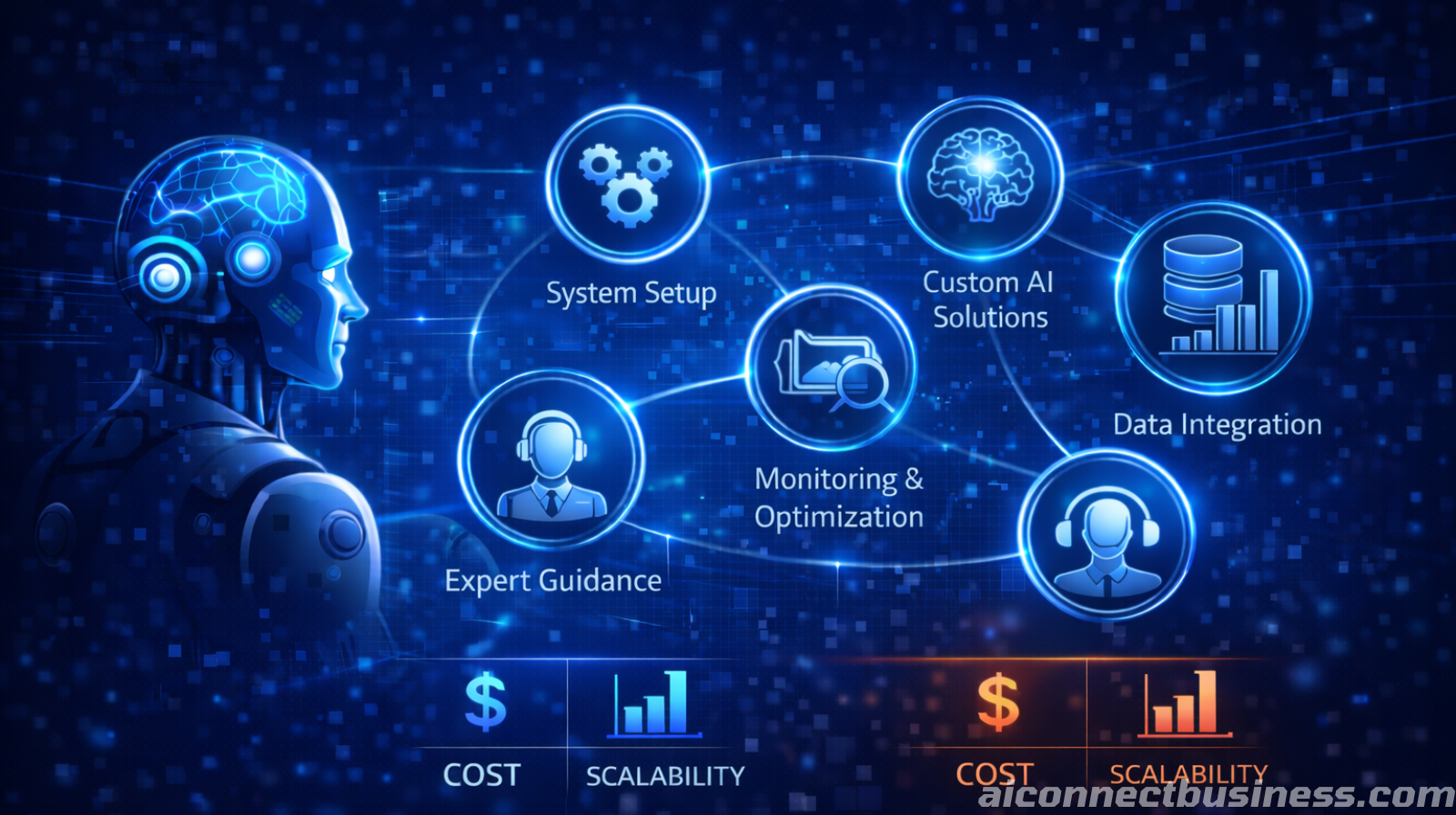
Discover why 70% of automation projects underperform and how continuous optimization ensures long-term success for your business.
Caed G.
December 19, 2025
You've invested thousands of dollars and countless hours implementing automation for your business. The initial results looked promising – leads were being captured, follow-ups were happening automatically, and your team had more time for high-value activities. But six months later, something's changed. Response rates are dropping, customers are complaining about irrelevant messages, and your automation feels more like a burden than a benefit.
If this sounds familiar, you're not alone. Research shows that 70% of automation projects fail to deliver their expected ROI within the first year. The culprit isn't usually the technology itself – it's the lack of ongoing optimization.
At AIConnectBusiness, we've seen this pattern repeatedly across industries. Businesses invest heavily in setting up automation but treat it like a "set it and forget it" solution. The reality is that successful automation requires continuous monitoring, adjustment, and improvement to maintain effectiveness.

When automation projects are left unoptimized, the consequences extend far beyond disappointing metrics. Here's what really happens:
Automation that worked perfectly at launch can quickly become irrelevant. Customer preferences change, market conditions shift, and what felt personalized six months ago now feels robotic and out of touch. We've seen HVAC companies lose 30% of their lead conversion rates because their automated follow-up sequences referenced outdated seasonal promotions.
Without regular maintenance, your automation systems accumulate bad data. Duplicate contacts, outdated information, and broken integrations create a cascade of problems. One professional services firm we worked with discovered their CRM had been sending follow-up emails to 400+ invalid addresses for eight months – damaging their sender reputation and wasting marketing budget.
Poorly maintained automation often creates more work than it eliminates. Staff spend time fixing errors, manually handling exceptions, and dealing with customer complaints about irrelevant communications. Instead of freeing up your team, broken automation becomes a time sink.
Understanding why optimization gets neglected is the first step to preventing it. Here are the most common reasons we see:
Many business owners assume that if their automation is running without obvious errors, it's performing optimally. They don't realize that "working" and "working well" are very different things. A lead nurturing sequence might be delivering emails successfully while achieving only a 2% conversion rate – when it could be achieving 8% with proper optimization.
Without proper tracking and KPIs, it's impossible to know when automation performance is declining. Many businesses focus only on basic metrics like "emails sent" rather than meaningful outcomes like "qualified leads generated" or "customer lifetime value."
Small and mid-sized businesses often lack dedicated staff to monitor and optimize automation systems. The person who set up the automation has moved on to other priorities, and no one else feels qualified to make adjustments.
There's a natural reluctance to modify systems that appear to be functioning. Business owners worry that making changes might break something that's currently working, so they leave everything untouched.
Successful automation optimization isn't about constant tinkering – it's about systematic, data-driven improvements. Here's the framework we use with our clients:
Set aside time each month to review key metrics across all your automation systems. Look at conversion rates, engagement metrics, error rates, and customer feedback. The goal isn't to make changes every month, but to identify trends and potential issues early.
Every quarter, conduct a comprehensive review of your automation performance. This includes analyzing customer journey data, reviewing message effectiveness, checking data quality, and identifying optimization opportunities. This is when you make strategic adjustments to improve performance.
Many businesses have seasonal patterns that require automation adjustments. HVAC companies need different messaging in summer versus winter. Retail businesses need to adjust for holiday shopping patterns. Build these seasonal reviews into your optimization schedule.
Always have at least one element of your automation under test. This might be email subject lines, message timing, call-to-action buttons, or entire sequence structures. Small, continuous improvements compound over time to create significant performance gains.
One of our clients, a mid-sized insurance agency, implemented an automated lead nurturing system that initially showed great promise. After six months, however, their conversion rates had dropped from 12% to 4%, and they were considering scrapping the entire system.
Our optimization audit revealed several issues: their messaging had become stale, they were targeting leads with irrelevant content based on outdated data, and their follow-up timing was misaligned with customer behavior patterns.
Through systematic optimization – updating message content, improving data segmentation, and adjusting timing based on engagement analytics – we helped them achieve a 15% conversion rate within three months. The same automation system that was "failing" became their most effective lead generation tool.
At AIConnectBusiness, we don't just set up automation and walk away. Our approach includes:
Every automation we implement includes comprehensive tracking and alerting systems. Our clients receive monthly performance reports and immediate notifications if any system performance drops below acceptable thresholds.
We conduct quarterly optimization sessions with each client, reviewing performance data, identifying improvement opportunities, and implementing strategic adjustments. This isn't an additional service – it's built into our ongoing partnership.
We maintain calendars for each client's industry and business model, proactively suggesting seasonal adjustments before they're needed. This ensures automation stays relevant and effective year-round.
Based on our experience working with hundreds of small and mid-sized businesses, here are the optimization mistakes we see most often:
If you're currently running automation without ongoing optimization, here's how to get started:
Gather data on your current automation performance. Look at conversion rates, engagement metrics, and customer feedback from the past six months. Identify your biggest performance gaps.
Ensure you're measuring the right metrics. Focus on business outcomes like qualified leads, conversion rates, and customer lifetime value rather than just technical metrics.
Block time in your calendar for monthly reviews and quarterly optimization sessions. Treat this as seriously as any other business-critical activity.
Begin with one small optimization test. This might be adjusting email timing, updating message content, or improving data segmentation. Learn from the results before making larger changes.
If you need help getting started, our strategy call can help you identify your biggest optimization opportunities and create a plan to address them.
The numbers speak for themselves. Our clients who commit to ongoing optimization see average performance improvements of:
More importantly, they avoid the hidden costs of neglected automation: damaged customer relationships, wasted marketing spend, and decreased team productivity.
Use our ROI Calculator to estimate the potential impact of optimization on your specific business.
The most successful businesses treat automation optimization as an ongoing business process, not a one-time project. This means:
When optimization becomes part of your business culture, your automation systems become increasingly effective over time rather than gradually degrading.

Automation isn't a "set it and forget it" solution – it's a powerful business tool that requires ongoing attention to deliver maximum value. The businesses that treat automation as a living system, continuously optimizing and improving performance, are the ones that achieve sustainable competitive advantages.
The cost of neglecting optimization is too high to ignore: declining performance, frustrated customers, and wasted resources. But the rewards of systematic optimization are substantial: improved conversion rates, better customer experiences, and stronger business results.
If your automation projects aren't delivering the results you expected, the problem probably isn't the technology – it's the lack of ongoing optimization. The good news is that this is entirely fixable with the right approach and commitment.
Ready to transform your automation from a static system into a continuously improving business asset? Learn more about how we work with businesses to implement and optimize automation systems that deliver lasting results.
Don't let your automation investment become another statistic. Start optimizing today, and watch your business automation deliver the ROI you originally envisioned.
Growth Automation is a system-level engagement designed to connect and orchestrate multiple automation lanes across your business. This service is built for companies that have moved beyond single-task automation and are ready to improve consistency, scalability, and performance across sales, operations, and internal workflows. We focus on how systems work together — connecting data, automations, and decision points — so your business runs as a coordinated system instead of disconnected tools. Automation evolves as your business grows, adapting to real-world operations rather than remaining static.
View Services →
Automation for professional service firms to improve lead follow-up, onboarding, and internal workflows.

Automation for manufacturing and industrial businesses to organize data and improve operational visibility.

Automation for medical practices to reduce front-desk load and improve patient follow-up.
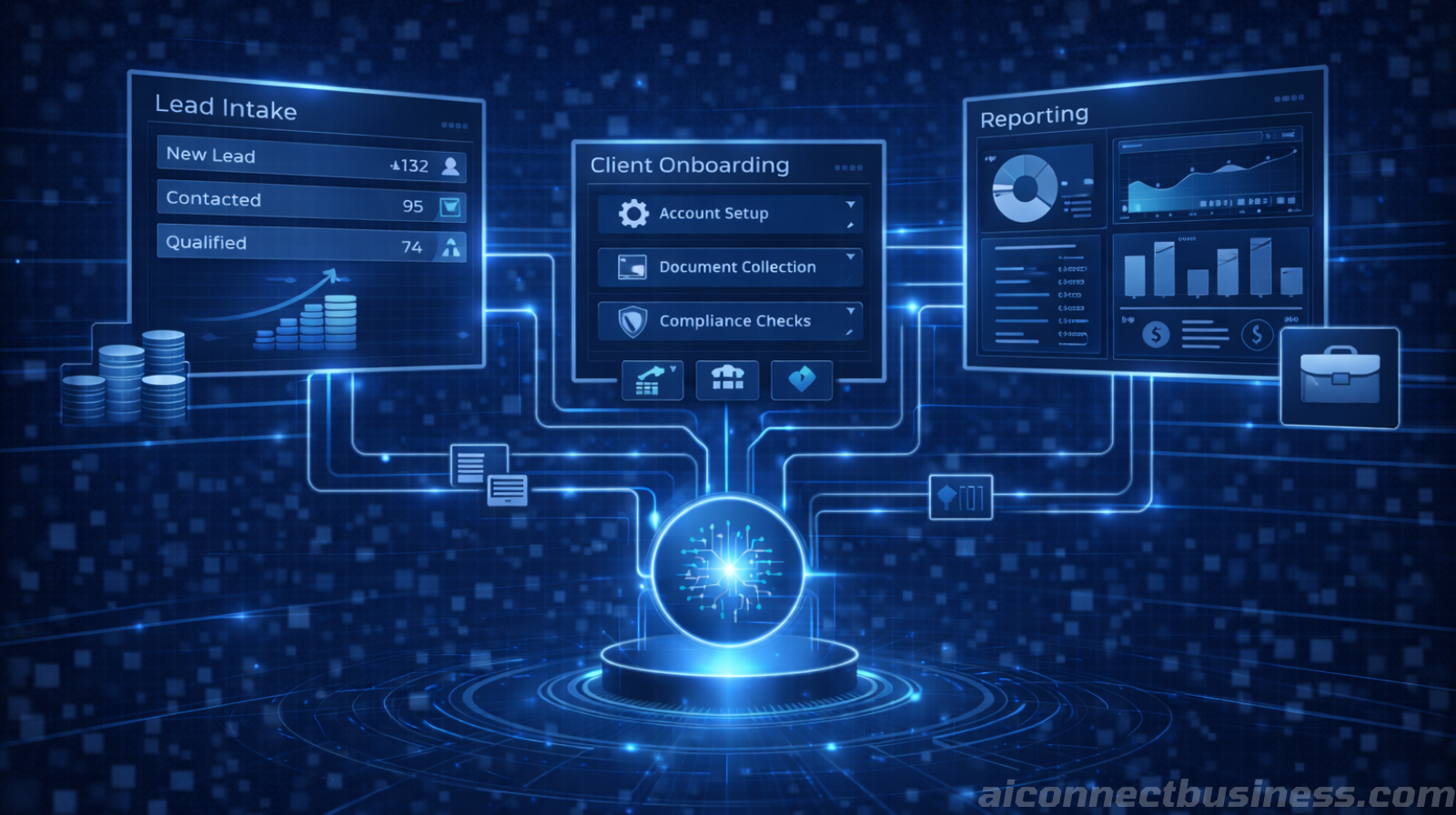
Automation for financial and insurance firms to improve lead handling and onboarding.

Discover why AI projects fail without proper team buy-in and learn practical strategies to overcome resistance, train effectively, and ensure successful adoption.
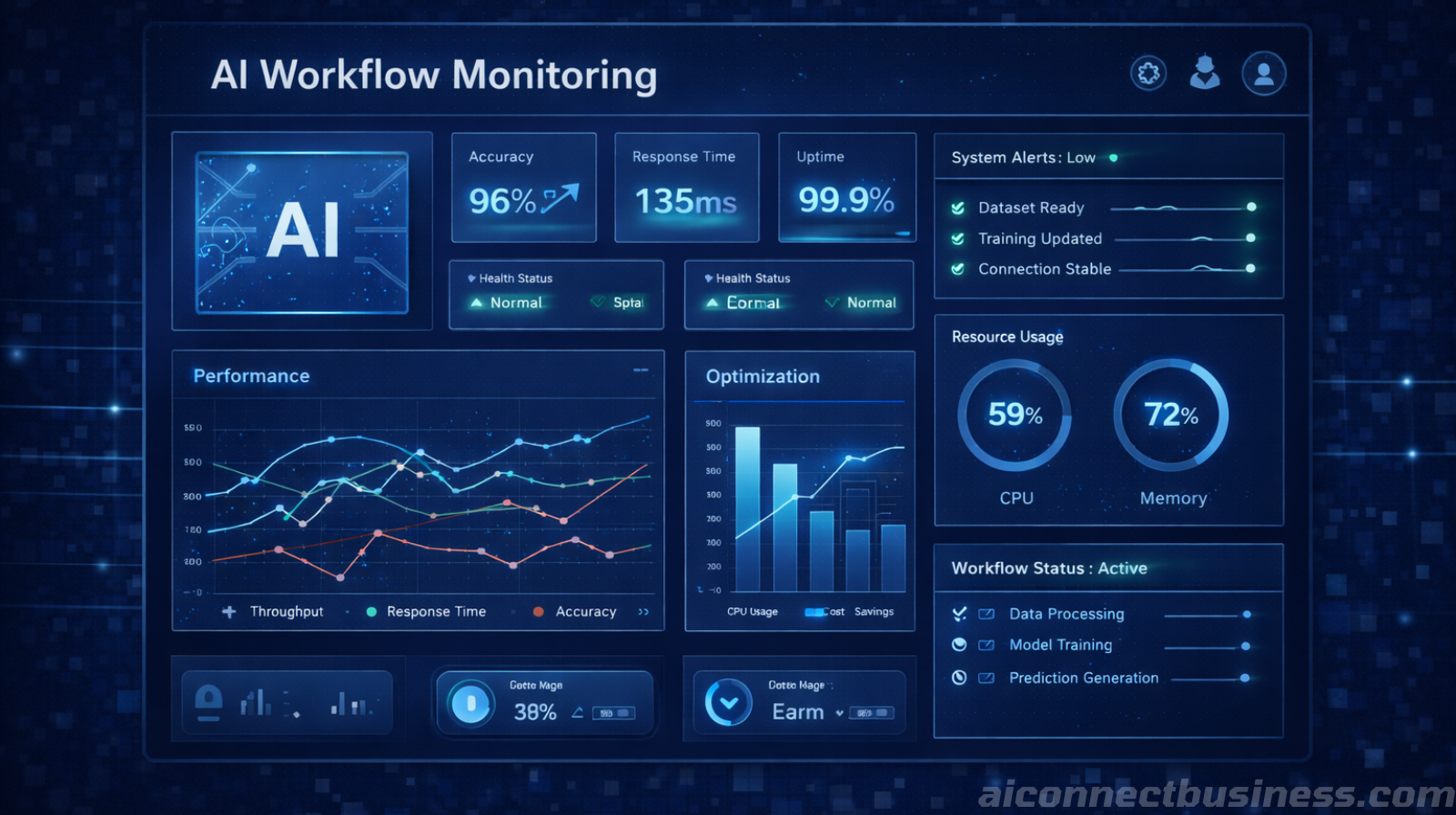
Discover why 70% of AI automation projects fail due to poor data quality and learn how to prepare your CRM, forms, and systems for successful automation.

Discover why AI automation requires ongoing optimization. Learn how monitoring, refining, and iterative improvements boost accuracy, speed, and ROI over time.

Address common AI security concerns for small businesses. Learn how to implement secure AI automation, RAG systems, and data protection without sacrificing efficiency.
Discover what legitimate done-for-you AI automation services should include and how to avoid costly shortcuts that hurt your business.

Discover the real costs and scalability benefits of AI automation compared to hiring additional staff for your growing business.

You don’t need a tech team to start automating. We help small businesses scale faster by leveraging AI. Save time, reduces errors, and keep leads from slipping through the cracks.
Book Your Free AI Audit